
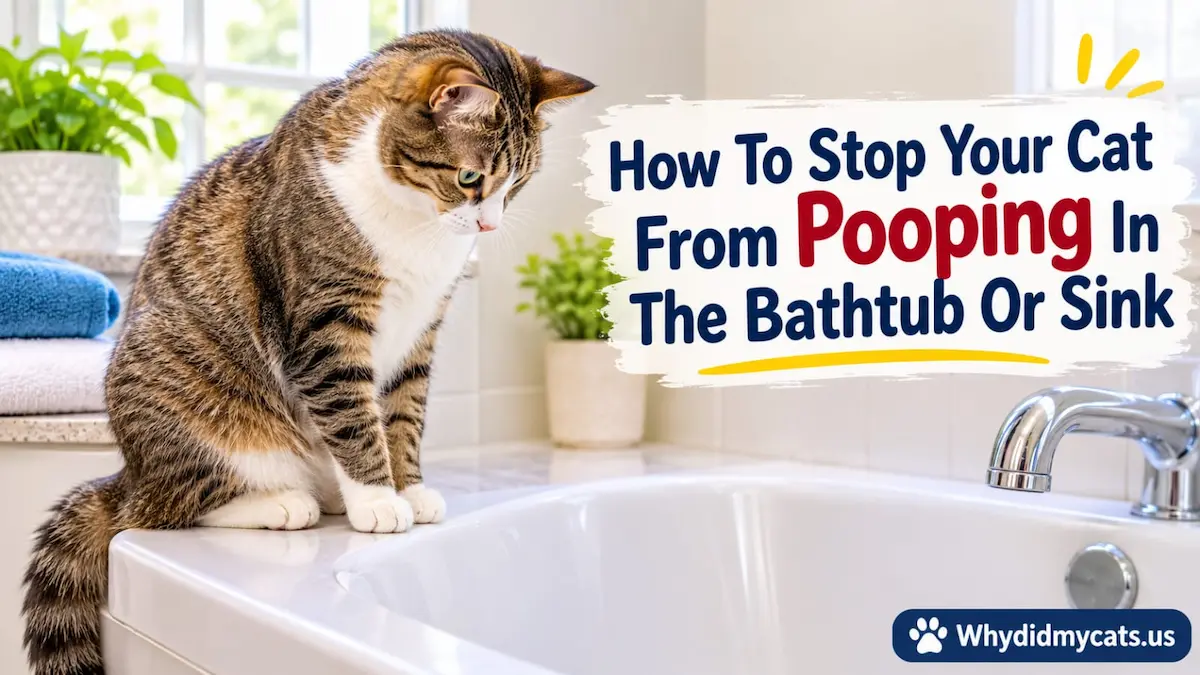
Why did my cat poop in the bathtub when her litter box is right down the hall? Most often because something about the box has stopped working for her: it’s dirty, too small, covered, or in a noisy spot. Stress or a physical problem like constipation, diarrhea, or sore joints can cause it too. It isn’t spite. Fix the litter box setup, rule out a medical cause, and call your vet promptly if the stool is bloody, she’s straining, or she hasn’t pooped in 48 hours.
Why Would a Cat Choose the Bathtub?
Nobody can ask her, but the tub offers several things a cat might like. It’s smooth, cool, and hard, nothing like litter she has to dig through. The bathroom is often the quietest room in the house, with a door that closes. Cats also develop strong preferences for the surface they go on, so a cat whose litter has started to feel wrong under her paws may settle on a surface that feels like the opposite.
9 Causes of Cat Poop in the Bathtub
1. The Litter Box Itself
A box that’s too small is the first thing to rule out. Most store-bought boxes are cramped for an adult cat. A good size is about one and a half times her length, nose to base of tail, so she can turn around and dig comfortably. Covered boxes trap odor, and many cats dislike them. Scooping once a day matters more than most owners expect. If she’s skipping the box entirely and not just choosing the tub, our guide on why cats stop using the litter box covers the wider picture.
2. The Litter
Did you switch brands recently? Cats notice. Heavily scented, dusty, or coarse litter is a common complaint, and a cat who dislikes the feel under her paws will look for something smoother. A tub is as smooth as it gets. If the change was recent, go back to the old litter for a couple of weeks and see what happens. Future swaps should be gradual, with a little of the new litter mixed into the old.
3. Where the Box Sits
Picture a one-bedroom apartment where the only spot left for the box is the laundry closet next to the dryer. Add a buzzer going off mid-poop, or a box parked beside her food bowl, and the bathroom starts looking like the only private room. Cats want quiet, low-traffic spots away from food and water. In a two-story house, keep one box on each floor.
4. Stress and Changes at Home
A move, a new roommate, a baby, houseguests, or a work-from-home schedule that suddenly puts you in the house all day can throw a cat off. A shy cat may head for the tub because it’s small, enclosed, and out of the way. Stress also upsets some cats’ stomachs, which gives them a second reason to avoid the box.
5. Other Pets
A dog that chases, or a second cat who guards the hallway, can make the box feel like a trap. The common recommendation is one box per cat plus one extra, placed in different rooms. Three boxes lined up along one wall count as a single box to a cat.
6. Digestive Trouble
Pain teaches cats fast. If pooping hurts, or a sudden bout of diarrhea caught her halfway to the box, she can start associating the box with discomfort.
Constipation shows up as hard, dry pellets and straining, and vets get concerned when a cat goes about 48 hours without a bowel movement. It can also fool you: liquid stool sometimes leaks around a hard mass and looks like diarrhea. True loose stool has its own causes, including food changes, parasites, and infections, and our article on why a cat has diarrhea goes through them. Intestinal parasites are worth a routine fecal test.
7. Age and Sore Joints
Cats start slowing down around ten, and arthritis often goes unnoticed because they don’t limp; they just stop jumping and avoid tall edges. A deep box becomes a hurdle. Older cats can also develop cognitive dysfunction, a dementia-like condition with confusion, night-time yowling, and forgetting where things are. In a senior cat, any new bathroom habit deserves a vet exam. A low-entry box is an easy upgrade.
8. A Switch From Outdoors to Indoors
If your cat used to do her business in the yard, a cold snap, a move to an apartment, or a decision to keep her inside can take away her old toilet. She may not see the litter box as the replacement. Keep it clean, uncovered, and somewhere quiet, and give her time.
9. Habit
Once a cat poops in the tub and nothing happens, the tub starts to smell like a toilet. Even after the original problem is fixed, she may keep going back. That’s why proper cleaning matters so much (see below).
What Your Cat’s Stool Is Telling You
Take a quick photo before you clean up. Your vet will find it useful.
| What you see | What it can point to | What to do |
| Normal, well-formed stool | Usually the box, location, or stress rather than the stomach | Work through the setup steps below |
| Soft or watery stool | Food change, parasites, infection, stress | Call the vet if it continues beyond a day or two, or if she seems unwell |
| Small, hard, dry pellets | Constipation, dehydration | Call the vet if she strains or goes 48 hours without stool |
| Slime or mucus in cat poop | Colon irritation, stress, parasites | Mention it at the next visit; call sooner if it keeps happening |
| Red streaks or blood | Straining, colon inflammation, other causes | Call the vet the same day |
| Black, tar-like stool | Digested blood from higher in the gut | Same-day vet visit |
Why Is My Cat Pooping in the Bathtub All of a Sudden?
A cat with years of reliable habits who suddenly starts using the tub should see the vet first, and be treated as a behavior case second. While you wait for the appointment, write down what changed in the past month: litter brand, food, box position, visitors, a new pet, travel, a new work schedule. The answer often traces back to the last thing that changed. If she’s also leaving stool elsewhere, our guide on why cats poop outside the litter box covers that pattern.
Why Is My Kitten Pooping in the Bathtub?
Kittens have little warning and short legs, so they use whatever corner is closest. Put a shallow, low-sided box wherever she spends time, and place her in it after meals, naps, and play. A tub accident here and there is part of learning. But kittens pick up worms easily, and diarrhea dehydrates a small body fast, so a kitten with loose stool, or one that skips a day, should see a vet sooner than an adult would.
Cat Pooping in the Bathroom Sink or on the Bathroom Floor?
The sink and tile floor appeal for the same reasons as the tub: hard, cool, and easy to leave. The causes are the same, and so is the fix. Work on the litter box first, because blocking one fixture just sends her to the next.
How to Stop Your Cat From Pooping in the Bathtub
Closing the bathroom door is the obvious move, and it works short term. But if the cause is still there, she’ll find another quiet corner. Work through it in this order:
- Day 1: rule out health problems. Call your vet if the habit is new, if there’s diarrhea, blood, or straining, or if she hasn’t pooped in two days.
- Day 1: clean the tub properly with an enzymatic cleaner (steps below).
- Day 1-2: fix the basics. Scoop daily, use a large uncovered box with unscented litter, and add an extra box in another room.
- Day 2: put a box in the bathroom, right next to the tub, temporarily. If she’s picked that room, meet her there.
- Day 2-7: make the tub less appealing. Close the door when you can, and add a shallow layer of water to the tub. Skip towels or mats, since soft absorbent surfaces invite more accidents.
- After about a week of steady box use, move the bathroom box a little each day toward the spot you want. A vet may also suggest a pheromone diffuser for a stressed cat.
- Never scold. Punishment teaches her to hide when she goes, not to use the box.
How to Clean Cat Poop From a Bathtub
Wear gloves, scoop up the stool with a bag or paper towel, and put it in the trash. Rinse the tub with warm water, apply an enzymatic cleaner labeled for pet waste, leave it on for the time the label says, then rinse and dry. Skip ammonia-based cleaners, since the smell can encourage repeat accidents. Never mix bleach with other cleaning products.
If anyone in the house is pregnant or has a weakened immune system, hand the cleanup to someone else when possible. The CDC advises that anyone who has to do it should wear disposable gloves and wash their hands thoroughly afterward.
When to Call the Vet
Book a regular appointment if the tub habit is new, keeps happening, or comes with accidents elsewhere. Call the same day for diarrhea that lasts more than a day or two, blood or black stool, repeated straining, vomiting, loss of appetite, lethargy, or a swollen or painful belly. Kittens and seniors get less leeway.
Straining in the litter box can be mistaken for constipation when it’s actually a urinary blockage. If your cat, especially a male, keeps squatting and produces little or no urine, go to an emergency clinic right away.
At the vet, expect questions about stool frequency and consistency, litter, diet, and recent changes at home. Bring a fresh stool sample in a sealed bag, plus your photos. The exam may include a fecal test, bloodwork, X-rays, or a urinalysis, depending on what turns up.
FAQs
What is revenge peeing in cats?
Revenge peeing isn’t a real motive. The phrase describes accidents that owners read as spite, but cats don’t plan payback. A cat peeing outside the box is signaling stress, a medical problem such as a urinary issue, or dislike of the box, litter, or location. Start with a vet check.
How do I stop my cat pooping in the bathtub?
Rule out medical causes with your vet, clean the tub with an enzymatic cleaner, and fix the litter box setup: scoop daily, use a large uncovered box with unscented litter, and add an extra box in a quiet spot. A temporary box in the bathroom helps. Close the door when you can.
My cat is still pooping on the floor even though the litter box is clean?
A clean box isn’t the only thing cats judge. Check the box size, litter type, lid, and location, and whether another pet is blocking access. Pain from constipation, diarrhea, or arthritis can also keep her away. If a clean, well-placed setup doesn’t solve it, schedule a vet exam.
Why is my cat peeing in the bathtub instead of the litter box?
Peeing in the tub often comes from box problems or stress, but urinary tract trouble such as cystitis or stones is a major possibility. Blood in the urine, frequent trips, straining, or crying calls for a prompt vet visit. A male cat straining with little or no urine is an emergency.
Why does my cat poop in the bathtub instead of the litter box?
The tub is smooth, quiet, and easy to leave, which can feel safer than a box that’s dirty, tight, scented, covered, or in a noisy spot. Stress, constipation, diarrhea, or joint pain can also push a cat away from the box. Fix the setup and check with your vet.
What smell will stop cats from peeing?
No scent reliably stops a cat from peeing, though some cats dislike citrus. Skip essential oils, which can harm cats. Remove old odor with an enzymatic cleaner, because lingering smell invites repeat accidents, and work on the real cause: the litter box, stress, or a health problem.
Conclusion
A cat in the tub is telling you that her toilet setup, her stress level, or her health needs a closer look. Check the box size, scooping, litter, and location, look at the stool, and bring your vet in early if there’s diarrhea, straining, blood, or 48 hours without a bowel movement. Most cats go back to the box once the cause is found and the tub stops smelling like a bathroom.