

A cat that suddenly leaves food in the bowl deserves attention, even if everything else seems normal. A change in appetite can come from something as simple as a food change or stressful event, but dental pain, nausea, digestive problems, and other illnesses can also make a cat stop eating.

The first thing to figure out is whether your cat has stopped eating completely or is simply eating less than usual. Also notice what happens at mealtime. Does your cat sniff the food and walk away? Try to eat but drop the food? Refuse one type of food but eat another? Those details can help your veterinarian work out what is going on.
Why Did My Cat Suddenly Stop Eating?
Sometimes the timing gives you the first useful clue.
A new brand or flavor, a different food texture, stale food, or a sudden change in feeding routine can put a cat off its meal. Cats can also eat less after moving, having visitors, getting a new pet, boarding, or experiencing another change at home. Stress is a recognized cause of appetite loss in cats.
Then there are physical problems. Dental disease is one possibility, particularly when a cat seems interested in food but has trouble chewing. Nausea, stomach or intestinal problems, respiratory illness, kidney disease, pancreatitis, and other medical conditions can also reduce appetite.
That is why a sudden refusal to eat shouldn’t automatically be blamed on pickiness.
Why Did My Cat Stop Eating but Acting Normal?
This is a common situation: your cat is walking around, using the litter box, grooming, and asking for attention, but the food bowl is barely touched.
Acting normal does not rule out a health problem. Cats can hide signs of illness, and appetite changes can appear before other obvious symptoms. Cornell notes that sustained appetite loss can accompany a wide range of feline health problems.
Watch what happens at the bowl. A cat that approaches food, sniffs it, and backs away is different from one that never shows interest in food. Drooling, chewing on one side, dropping pieces of food, repeated swallowing, or walking away after trying to eat can point toward discomfort in the mouth or difficulty swallowing.
Also check whether your cat is actually eating somewhere else. In a home with two or more cats, one cat can quietly eat from another cat’s bowl, making the situation harder to judge.
Why Did My Cat Stop Eating Wet Food?
If your cat suddenly refuses canned food but still eats dry food, the problem may be specific to the food rather than a complete loss of appetite.
Think about what changed. Did you switch brands, flavors, textures, or recipes? Was the food served straight from the refrigerator? Has the can been open for a while? Some cats are very particular about smell and texture.
Dental discomfort can complicate this, too. A cat that wants to eat but finds chewing uncomfortable may change what it chooses to eat or avoid food altogether.
Don’t assume that refusing wet food means your cat simply “doesn’t like it.” Look at the bigger eating pattern.
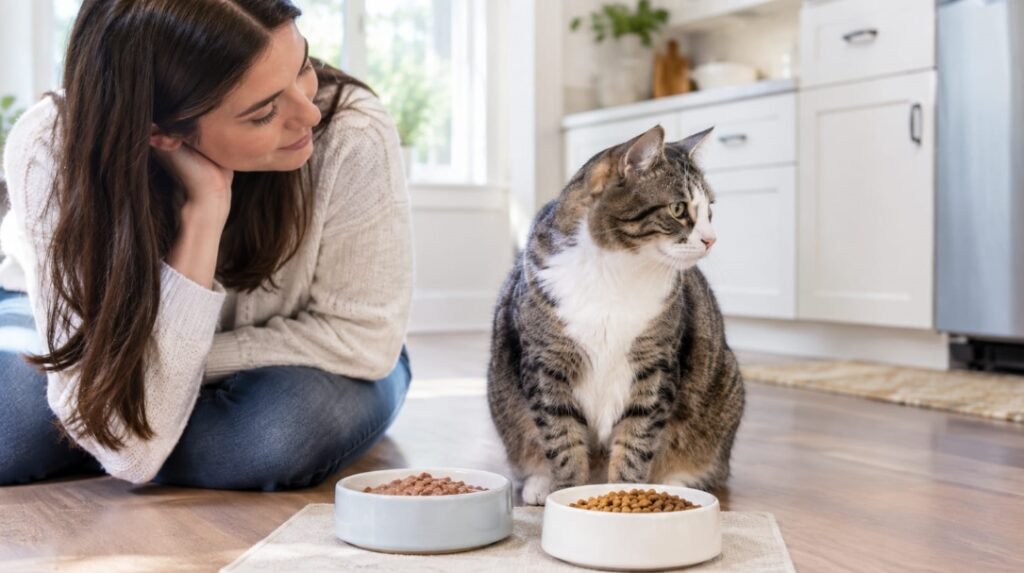
Why Did My Cat Stop Eating Dry Food?
Dry food refusal can happen for many of the same reasons, but the way your cat behaves around the bowl matters.
If your cat suddenly avoids crunchy food while showing interest in softer food, mouth or dental discomfort is one possibility worth discussing with a veterinarian. Cats with dental disease can appear picky because chewing certain foods hurts.
On the other hand, if your cat refuses both dry and wet food, especially for a prolonged period, it is less likely to be just a preference issue.
What Changed Before Your Cat Stopped Eating?
Before assuming your cat is sick—or simply being stubborn—look back at the previous week or two.
Think about:
- A new cat, dog, or person in the home
- Moving furniture or moving to a new house or apartment
- A change in your work schedule
- Visitors staying over
- A different feeding location
- A new food or sudden diet change
- Boarding or travel
- Another stressful event
- Medication or a recent illness
A quiet indoor cat can be affected by changes that seem minor to you. Merck Veterinary Manual lists diet changes and stressful events such as moving, boarding, introducing a new pet, and losing a companion among factors associated with appetite loss.
If nothing changed at home, that makes a physical cause more important to consider.
What Other Signs Should You Watch For?
Don’t focus only on the food bowl. Look at the rest of your cat’s behavior.
A cat that stops eating and also develops vomiting, diarrhea, unusual tiredness, weight loss, drooling, difficulty chewing, trouble swallowing, increased or decreased drinking, or changes in urination needs veterinary attention.
Breathing problems, repeated vomiting, blood in vomit, severe weakness, or obvious pain are more urgent concerns.
Keep track of when your cat last ate a normal meal. That simple detail can be very helpful when you speak with your veterinarian.
What Can You Do If Your Cat Won’t Eat?
If your cat has only skipped part of a meal and otherwise seems well, you can make the next meal easier to approach without forcing food.
Try offering the cat’s usual food in a quiet area away from children, other pets, and heavy household activity. Make sure the food is fresh and the bowl is clean. If your cat normally eats wet food, bringing it closer to room temperature can make the smell more noticeable.
Don’t force food into your cat’s mouth. Cornell notes that force-feeding can worsen food aversion.
Keep fresh water available and observe whether your cat is drinking. Most importantly, don’t spend several days experimenting with different foods while a cat continues to eat little or nothing.
When Should You Call a Veterinarian?
A cat that refuses food deserves attention because prolonged food avoidance can become dangerous. Cornell notes that anorexia can have a serious impact on an adult cat’s health after as little as 24 hours, while VCA advises prompt evaluation for decreased appetite or refusal to eat.
Contact your veterinarian promptly if your cat has not eaten properly for about 24 hours, or sooner if your cat is very young, has an existing medical condition, is diabetic, or has other concerning symptoms. VCA specifically lists more than 12 hours without eating as a reason for urgent-care evaluation, so there is no need to wait for a full day when your cat already seems unwell.
A veterinarian may examine your cat’s mouth and teeth, check hydration and weight, and decide whether bloodwork, imaging, or other tests are needed based on the examination.
FAQs
How long is it okay for a cat to not eat?
Don’t treat prolonged food refusal as something to simply wait out. Cornell notes that an adult cat’s health can be seriously affected when appetite loss persists for as little as 24 hours. Contact your veterinarian sooner if your cat is young, diabetic, ill, or showing other symptoms.
How can I get my cat’s appetite back?
Offer familiar, fresh food in a quiet feeding area and make sure clean water is available. Avoid force-feeding. If your cat continues refusing food, the priority is finding the reason rather than repeatedly changing foods or trying to stimulate appetite at home.
What does it mean when a cat won’t stop eating?
Constant hunger is different from refusing food. Increased appetite can occur with conditions such as hyperthyroidism or diabetes, especially when accompanied by weight loss or increased thirst and urination. A persistent change in eating habits deserves a veterinary discussion.
Why did my cat suddenly stop eating?
A sudden appetite change can follow a food change, stressful event, dental discomfort, nausea, digestive illness, or another health problem. Check what changed recently, but don’t assume stress or pickiness is the cause when your cat is eating little or nothing.
What are four signs your cat is suffering?
Four signs that deserve attention are refusing food, repeated vomiting, unusual lethargy or weakness, and obvious pain or difficulty eating. Other concerning changes include breathing problems, dehydration, abnormal urination, and significant behavior changes.
Final Thoughts
A cat that stops eating isn’t necessarily facing an emergency, but it’s not a change to ignore either. Check what changed, watch how your cat behaves around food, and keep track of how long the appetite loss lasts.
If your cat continues refusing food or develops other symptoms, getting veterinary advice is safer than assuming it’s just a food preference.
[…] bites when you touch a particular part of her body, or shows other changes such as hiding, reduced appetite, limping, changes in grooming, or obvious […]
[…] Loss of appetite changes the situation. A cat that vomits yellow liquid and then refuses food should not simply be watched for several days. […]
[…] Changes in appetite or thirst […]
[…] your cat also refuses food after vomiting, read our guide on why your cat stopped eating to learn what this change in appetite may […]
[…] your cat’s appetite has changed, read our guide on why your cat stopped eating for more information about possible causes and next […]
[…] behavior change is simply a sign of love. If your cat is also eating less or refusing food, read what to do when your cat stops eating and contact your veterinarian for […]
[…] food harder to smell, but appetite loss can also signal a more significant illness. Our guide to why cats stop eating explains why that change should not be […]
[…] If your cat has stopped eating altogether, read our guide on why your cat stopped eating altogether. […]
[…] becomes weak, or develops abnormal discharge should be checked by a veterinarian. Read our guide on why a cat may stop eating for more information about appetite […]
[…] If your cat also refuses meals, read our guide on why your cat may stop eating. […]